
Object Record
Images
Metadata
Catalog Number |
2005.032.028 |
Collection |
Davis, Sharon King |
Object Name |
Clock, Wall |
Date |
circa 1921 |
Description |
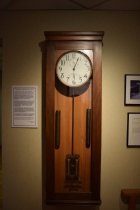
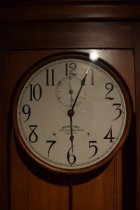
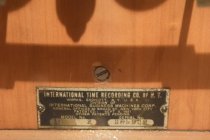
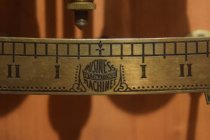
Weight-driven, electrically wound, master wall clock featuring a wooden case and mercury pendulum manufactured by International Time Recording Company of Endicott, NY, circa 1921. The company was a division of International Business Machines Corporation. The clock measures 19.5 inches in width, 7.5 inches in depth, and 62 inches in height. The clock dial contains the name of the maker. The pendulum contains two cylinders filled with mercury. Ther lower portion of the interior of the cabinet contains a small, metal maker's plaque signifying the patent date of 1921, model number 6-2, and serial number 365932. The Coliseum, a large indoor arena, occupied the entire east side of Elgin Avenue between 5th and 6th Streets in Tulsa, OK. Leon Senter designed the building. A Minnesota millionaire and owner of Douglas Oil Company, Walter Whiteside, financed the construction, which approximated $800,000. The building opened for use on January 1, 1929. The arena contained thirty-five seating sections. It also contained an organ, which cost $25,000. The Coliseum was used for ice skating shows, Tulsa Oilers games, rodeos, boxing matches, and track meets. In 1944, Tulsa businessman and sports promoter Sam Avey purchased the Coliseum. During the building's twenty-three-year history, the Coliseum became a well-known local landmark. On Saturday night, September 20, 1952, lightning struck the building and set off a large fire. Some 150 firemen fought the wind-whipped blaze, but all in vain. The Coliseum was a total loss. |
Search Terms |
arenas clocks Coliseum |
People |
Avey, Samuel Earl |